Showing posts with label Red Army Choir. Show all posts

20 October 2009

Five More Good Songs

I've been listening to rather a lot of music as of late, and rather diverse variety of music, to boot. The sole advantage of a morning commute that borders on thirty minutes in duration is that it gives me plenty of time to delve into my music collection (that's me, always looking on the bright side). Let's take a look at five songs that I've had on heavy rotation recently.

***

"The Elk King's Daughter"
Nest
Fabled Lore


The music of Nest is a stirring blend of folk music and ambient soundscapes. Aslak Tolonen is the creative force behind Nest, and he draws his inspiration from the natural beauty of the Finnish landscape. Appearing on Nest's 2000 demo tape Fabled Lore,"The Elk King's Daughter" is an especially atmospheric track that brings to mind a feeling of isolation. Yet rather than being melancholic, the mood is actually quite peaceful, as though it were the score of a fairytale. For me, this song is quite evocative of the foggy winter nights I spent in Washington. For those interested, the track is available for a listen at this site.


"It's Only A Paper Moon"
The Paul Whiteman Orchestra

As with many of the classic Jazz standards, there are numerous extant recordings of "It's Only A Paper Moon". The version I had in mind, however, is the 1933 version recorded by the Paul Whiteman orchestra with vocal accompaniment by Peggy Healy. This recording of the song was featured on the soundtrack to the Peter Bogdanovich film Paper Moon (1973) (the film takes its name from the song). It's one of those catchy old numbers that sticks in your head and stays there for quite a while. And yes, I did like the movie. Rather a lot, in fact.


"Cremation Ghat II"
Om

God Is Good

Om was formed from the ashes of the legendary Stoner Doom band Sleep. Om's meditative, quasi-ritualistic brand of music has always carried an oriental twist, but God is Good, the band's latest offering really allows those influences to shine through. "Cremation Ghat II" is perhaps the most memorable cut from the album; although it is not quite five minutes long, the track is quite epic within the confines of that short direction. The use of sitars give the song a decidedly Indian flavor, and the whole composition evokes a feeling of crossing the desert (or perhaps ascending to Shangri-La). Do give the song a listen over at Om's MySpace.


"Discipline"
Nine Inch Nails

The Slip


I used to listen to Nine Inch Nails quite a lot way back when (and by quite a lot I mean all the damned time). I've returned to listening to the band after an absence of a few years, and it seems that somewhere along the line I forgot just how good Nine Inch Nails really is. In May of 2008, Trent Reznor and company decided to give away a complete album to the fans, with no strings attached. That album was The Slip, and it's just as good as NIN fans could have expected it to be. My personal favorite track from The Slip would have to be "Discipline", with its driving tempo that is faintly reminiscent of 80s New Wave. The album is definitely worth getting for those unfamiliar with NIN's music (if there is anyone left who isn't by now), since it is not only quite accessible but also quite free.
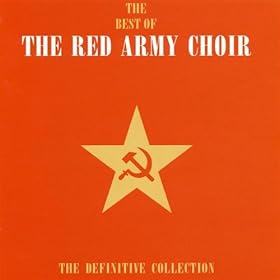

Смуглянка ("Smuglianka")
Red Army Choir


You just knew these guys were bound to show up on this, didn't you? Although it bears the musical hallmarks of traditional Russian folk music, "Smuglianka" is actually a fairly recent composition (insofar as one may call the early 1970s recent). The song seems to have first appeared in a film about Soviet pilots entitled В бой идут одни «старики» (Only the Veterans Will Go to Fight). As for the song, it starts off softly but builds up to a frenetic crescendo during the chorus. It's also extremely catchy -- just have a listen, and I'll guarantee you that you'll have it stuck in your head for weeks).

10 August 2009

Musical Interlude: Dovator's Cossack Song


"Dovator's Cossack Song" celebrates the heroism of General Lev Mikhailovich Dovator and the men of his 2nd Guards Cavalry Corps, many of whom died in the defense of Moscow (as did General Dovator himself).

The lyrics:

Сквозь леса дремучие, с песнею весёлою,
С острыми клинками, на лихих конях,
Движутся кубанцы, казаки-гвардейцы,
Чтоб с врагом расправиться доблестно в боях.

Chorus:
Эх, бей, кубанцы!
Руби, гвардейцы!
Рази фашистов подлых, пощады не давай!
На победу славную, на защиту Родины
Нас водил Доватор, любимый генерал.

С именем Доватора, полководца смелого,
Грозною лавиной на врага мы шли.
Где прошли доваторцы - казаки кубанские,
Гитлеровцев полчища смерть себе нашли!

(Chorus)

Славными победами мы свой путь отметили,
Били мы фашистов, бьем и будем бить:
Пушками, гранатами, миной, автоматами,
Резать пулеметами и клинком рубить!

(Chorus)

06 March 2009

Five Good Songs

I haven't said much about music in some time. Not due to a lack of interest, mind you, but mostly due to a lack of training in musical criticism. Music has had an almost immeasurably significant influence on me over the years, and I'd like to be able to say more about the music I listen to than I currently do. The problem is that reviewing many of the albums I listen on a track-by-track basis can become somewhat tedious, given that said tracks are not of the radio-friendly "Top 40" variety. Current 93, for example, is out to write good music with actual depth and feeling, not just catchy hit songs that will become fodder for the VH1 retrospectives of tomorrow.

Ultimately, when I do try to review an album, I wind up focusing on the strongest tracks. With that habit in mind, I've decided to forgo focusing on a single album this time around, and instead have opted to discuss a selection of my favorite songs (at least for the moment). In no specific order, the selections are as follows.

***

"13 Years of Carrion"
Death in June
Rose Clouds of Holocaust

One of the better songs in Death in June's already impressive library is the down-tempo number "13 Years of Carrion". The primary elements of the track are Douglas Pearce's vocals and acoustic guitar, but while those elements are enjoyable enough on their own, the use of synthesizers lend an additional dreamlike atmosphere to the song. A trumpet is also featured, which gives the middle part of the song something of a jazzy quality. "13 Years of Carrion" originally appeared on the 1995 album Rose Clouds of Holocaust, and it's atmosphere is present throughout the album. The dreamy and hypnotic quality of the album brings to my mind images of hypnotic sequences from some dimly-remembered television show of my childhood. An alternate rendition of "13 Years of Carrion" appeared on Death in June's Abandon Tracks compilation in 2005, a rendition which gave the song more of a Folk-ish feel.

"Silver"
Jesu
Silver

The titular track from Jesu's 2006 Silver EP showcases all the qualities that makes the music of Justin Broadrick and company so great. Jesu takes the oft-depressing heaviness of Doom Metal, the distorted electronica of Industrial music and the uplifting soundscapes of Post-Rock and fuses these disparate elements into some truly great music. "Silver" is a shining (pun only somewhat intended) example of Jesu at their best. It's the sort of song to listen to whilst leaving home--there is a definite sense of loss in the song, but at the same time a feeling of hope that borders on wonderment, which provides a poignant counterbalance to the sadness. "Silver" brims with pathos and catharsis in a way that not many songs can.


"Brother, Can You Spare a Dime?"
Bing Crosby

There are a number of recorded versions of this song, it being one of the most popular and memorable songs of the Great Depression. Bing Crosby's version of the song is among the best-known renditions, and happens to be the one I have. Whereas the primary appeal of the two earlier selections lie in the quality of the music, this time around it's the lyrics that make the song interesting. Aside from the fact that it comes from an era to which I am inexplicably drawn, I find the lyrics timely in two different ways. The most obvious reason is that the song is about living in hard times, the sort of times which are slowly and surely engulfing the country (and, it seems, the world). More profoundly, the song also reminisces about the bygone good old days, which just happens to be one of my major pastimes. I, like the man in the song, once was "building a dream", although my dreams were of the collegiate and academic variety, rather than the commercial and industrial. Either way, as the lyrics go, "now it's done." Some 78 years after its original conception, "Brother, Can You Spare a Dime?" maintains its significance and appeal.

"Long Gone"
Goatsnake
Dog Days

Thus far the list has been fairly down-tempo (and a bit depressing, too). Goatsnake's "Long Gone" is rather a different affair. Goatsnake's music is heavily influenced by Black Sabbath (as is all Doom Metal), with a healthy dose of Southern/Blues Rock grooves thrown in for good measure. Though it's fairly short--less than three minutes long!--"Long Gone" (from the 2000 EP Dog Days) is a thoroughly enjoyable romp through nonchalance at life's little obstacles, expressed through the unrepentant sauciness of the lyrics and the music. Goatsnake's sound is heavy and low frequency, which isn't much of a surprise if you consider that Greg Anderson (of Sunn O))) fame) is the guitarist.


Несокрушимая и Легендарная ("Invincible and Legendary")
Red Army Choir


Penned in 1943 at the apex of the Great Patriotic War by the great Soviet composer Alexander Vasilyevich Alexandrov, "Invincible and Legandary" is an uplifting and triumphant march and the de facto anthem of the Red Army. Say what you will about the Soviet government, the Red Army always had some of the best music. The version of the song I have appears under the erroneous title "USSR Army Song" on a French compilation album I found on the iTunes store. The album features a significant collection of popular Soviet songs from World War II, "Invincible and Legendary" being among the best. If this sort of music doesn't inspire you to drive the Fascists from the motherland, nothing will (here's some evidence that supports my theory).

01 February 2009

Musical Interlude: Song of the Volga Boatmen

I've had this song stuck in my head the past few days (I had a lot of things stuck in my head the past few days, actually; this just happens to be among the least depressing of them). Here's the A. V. Alexandrov Russian Army Twice Red-bannered Academic Song and Dance Ensemble (more comfortably known as the Alexandrov Ensemble or the Red Army Choir) performing an excellent rendition of a classic Russian folk song. Be sure to watch it high quality for maximum effect.