28 February 2008

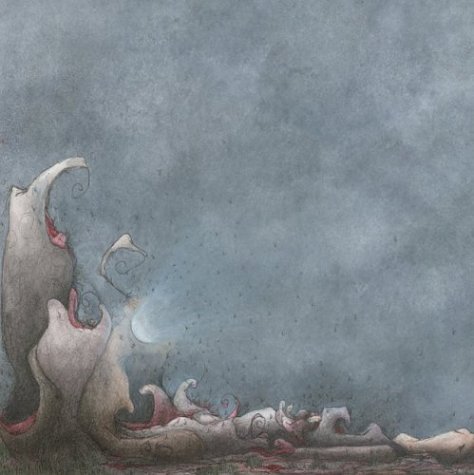
Album of the Week: Eluvium - An Accidental Memory in the Case of Death (2004)

This weeks album is rather a change of pace from weeks past. Eluvium is the brainchild of Matthew Cooper, a multi-talented composer and musician. The Eluvium discography contains a variety of different sounds, from ambient post-rock to neoclassical piano suites. An Accidental Memory in the Case of Death, released in 2004, falls firmly within the latter category.

The album is a relatively brief affair, clocking in at less than a half hour, but (as the platitude goes) good things often come in small packages. The music here is extremely peaceful, with an atmosphere that seems to drift back and forth between sadness and joy. Every track on the album is solid (with the possible exception of "Nepenthe," which seems to grate on my nerves somewhat), but the odd-numbered tracks, in a peculiar coincidence, seem to be a bit better.

The first track, "An Accidental Memory," introduces the album, and reels the listener in with its stirring melody. From there the album moves on to "Genius and Thieves," which maintains the atmosphere established by the first track with its playful yet somewhat sad tune. "Perfect Neglect in a Field of Statues," one of the best pieces on the album is next, followed by "Nepenthe" which, though I don't enjoy it as much as it's predecessor or it's follower, still maintains the atmospheric flow. "In a Sense," though brief, is an effective, moving composition, indeed one of the best on the album. The longest track is next, entitled "The Well-Meaning Professor." It may also be the most dramatic song, with a more forceful melody. Finally, "An Accidental Memory in the Case of Death" brings the album to a satisfying end, reviving the melody of the introductory track and expanding it into an even more stirring theme. Indeed, this last song may be the best of the lot.

An Accidental Memory in the Case of Death is an album at once relaxing and moving. Listening to it brings to my mind the image of a room with white walls and a an exquisitely polished hardwood floor. One of the walls is dominated by a large bay window, which looks out to a cloudy sky. In the center of the room stands a piano, the source of the music, music so evocative as to be capable of conjuring up such a vivid image. It's just that good.

25 February 2008

Anita Page and the Ideal Screen Type

Was Anita Page the perfect movie star? Benito Mussolini certainly thought so. We all know by now where my loyalties lie, but this graph nevertheless makes a compelling argument. Not that I need any convincing that Miss Page was quite the looker in her day, mind you. On the other hand, it does remind me of some strange sort of eugenics. While we're on the subject of genes, Anita must have good ones, as she is still alive today at the ripe old age of 97.

In any event, it's rather a good thing that Anita never took up Mussolini on his offer of marriage. Just look at what happened to Clara Petacci.

Just so credit is given where credit is due, the above image was originally found here. I cropped it a bit, that I might save some space.

24 February 2008

The Women (1939)

Few movies are as true to their titles as is The Women. There's not a Y chromosome in the entire film. Not that I minded terribly; men can be very annoying, and I found myself glad to be rid of them while watching this movie.

The Women follows the story of socialite Mary Haines, whose husband, unbeknown to her, has been unfaithful to his wife (to put it blithely), seeing perfume saleswoman Crystal Allen on the side. Hilarity ensues as, thanks to a loose-lipped manicurist, Mary learns of her husbands extracurricular activity, and files for a divorce. Mary's so called friends, among them the odious Sylvia Fowler, delight in her downfall, wretched gossips that they are. Of course, this being 1939, everything works out in the end, with everyone getting their just desserts.

Mary Haines is played by Norma Shearer, who gives an admirable and sympathetic performance of the wronged wife. Joan Crawford plays Crystal, the gold-digging homewrecker par excellence, and she turns in quite a performance (although her hairdresser, it must be said, deserves a traitor's death. Joan sports a rather unflattering coiffure throughout the flick, sad to say). The two work extremely well as rivals in the film, since they were fierce studio rivals at MGM in the 1930s, and probably hated each other. Seriously, there's a cat fight that I'd pay good money to see.

The character I really loathed (as I no doubt was supposed to) was Sylvia Fowler, played well by Rosalind Russel. Russel does a fine job of being a manipulative, obnoxious, conniving shrew--I wanted to backhand Mrs. Fowler no fewer than a half-dozen times.

The film is in black and white, with the exception of a Technicolor fashion show, apparently inserted into the movie with the sole purpose of showing off the haute couture of costume designer Adrian. This, I thought, was a bit much, and I can understand why the sequence isn't always included in showings of The Women. On the other hand, it was enjoyable to see some of the incredibly gaudy outfits, some of which I can't possibly imagine any respectable woman wearing, even back in the day. Of course, The Women was produced on the even of the 1940s, and I find 40s styles in many ways atrocious, especially when it comes to women's hairstyles.

As a personal note, I was glad to see Dorothy Sebastian back on screen, even if hers was only an uncredited, bit part. I could barely recognize her with blond hair (which, I might add, was done up in hairdo on par with Joan's. I don't know who was responsible for styling the hair in this movie, but they are dire need of a beating).whoops, never mind that part.

I rather enjoyed The Women. I found the recurring references to Jungle Red particularly amusing, especially Mary's remark about her "claws" at the end of the movie. If I ever find myself leading an armored division into battle, rest assured that "Jungle Red" will be our battlecry.

And did I really just write several paragraphs arguing about costume design and hairstyles? Good God. Pardon me, but I have to go play some violent video games while listening to Death Metal.

21 February 2008

Album of This Week: Jethro Tull - The Minstrel in the Gallery (1975)

Before I begin, I think a bit of a disclaimer is in order. I'm not nearly as steeped in the history and mythology of Classic Rock as I am in Black Metal, but I do know what I like. That being said, this week's album is Jethro Tull's The Minstrel in the Gallery.

Elements of English folk music abound on this album, not the least of which is Ian Anderson's skilled flute playing. Furthermore, these folkish passages are intertwined seamlessly with more conventional elements of traditional Rock Music. The Minstrel in the Gallery is dominated largely by two tracks, the eponymous "Minstrel in the Gallery" and "Baker St. Muse," which have the effect of bookending the album quite nicely. The latter track is quite the composition, being an amalgam of several songs into one--something which Jethro Tull did with some regualrity (see Thick as a Brick for proof), and which works quite well here, as each component song is different from the others, while being linked thematically.

A mixture of acoustic and rock tracks round out the album quite nicely; "One White Duck / 010 = Nothing At All" stands out in particular. The 2002 re-release of the album featured several bonus tracks, "Summerday Sands" being perhaps the most memorable of these (and a good song in its own right, even if it wasn't on the 1975 original.

The Minstrel in the Gallery is a Progressive Rock classic which stands up well to repeated listenings.

19 February 2008

My Soul for His Glory

Behexen released their latest album, entitled My Soul for His Glory, on 8 February (the day before my birthday, I might add). It is their first LP since 2004's By the Blessing of Satan, and it seems that their sound has undergone something of an evolution in that four year interim. The changes they seem to have made are, I assure you, for the better. Whereas By the Blessing of Satan was an onslaught of black cacophony that bordered on the unlistenable, My Soul for His Glory has a much cleaner (though still blazingly furious) sound.

Not only does the album look great (sporting excellent artwork done by Babalon Graphics), but musically it is everything that Black Metal should be. The atmosphere of blasphemous, unabashed evil is spot-on, thanks to the unexpectedly clear production that the album features. There are some great guitar riffs to be heard here--the echoing riff in "Demonic Fleshtemple" is particularly memorable. However the most pleasant surprise (insofar as this sort of raw, uncompromising Black Metal can be pleasant) lies in the rhythm section--the necessary blastbeats are present and accounted for, but they are never excessive; indeed there is a significant amount of variety in the drumming.

2008 is still young, but My Soul for His Glory is an early candidate for album of the year. Leave it to a gang of Satan-worshiping Finns to pull of a great album like this.